HomeBusiness lawBusiness succession planning
Business succession planning
Business succession planning solicitors in Scotland
Every business owner will step back one day, whether by choice, through ill health or on death. A clear succession plan protects the business you have built, your family and your fellow owners, and makes sure ownership passes in the way you want.

Protect the business you have built
A good plan deals with ownership, control, family and tax. Choose the part you want to start with.
Why a succession plan matters for business owners
Many business owners put off succession planning because it feels distant or difficult to discuss. Yet without a plan, the death, illness or retirement of a key owner can leave a business without leadership, cause disputes between family members and co-owners, and create an avoidable tax bill. Lenders, customers and staff also want to know the business has a secure future.
Effective succession planning brings together company law, partnership law, wills, trusts and tax. Our business lawyers in Glasgow work with your accountant, your financial adviser and, where needed, wills and estate planning specialists, to draft a joined-up plan, and to review it as your business and family circumstances change. Whether you are a professional practice, farmer, retailer or manufacturer, the right succession plan gives you peace of mind that your business, and your estate, will pass in the way you intend. We act for business owners throughout Scotland, from Glasgow to Edinburgh and beyond, and your lawyer will make sure each part of the plan fits together.
Succession planning for a family business
Family businesses face particular challenges. Some family members work in the business and others do not. Some want to stay involved, while others want to realise the value of their share. A good plan for a family business usually considers:
- Who will run the businessIdentifying and developing the next generation of leaders, whether from within the family or outside it.
- Who will own the businessHow shares or partnership interests will pass, and whether ownership and control should be separated.
- Fairness between family membersBalancing the interests of children who work in the business with those who do not.
- Retirement fundingHow the outgoing generation will be paid, for example through a phased sale of shares or a company purchase of its own shares.
- Family governanceAgreed rules on decision making, dividends and family employment, sometimes set out in a family charter.
Wills, powers of attorney and other documents in a succession plan
- Shareholders’ or partnership agreementRules on what happens to an owner’s shares or partnership interest on death, incapacity, retirement or leaving, including pre-emption rights and valuation.
- Articles of associationTailored articles that work alongside the shareholders’ agreement and control who can hold shares.
- Cross-option agreementsAgreements, often funded by life insurance, allowing surviving owners to buy a deceased owner’s shares and the family to sell them.
- WillsA will that deals properly with your business interests, so that shares pass to the right people and valuable tax reliefs are not wasted.
- Continuing power of attorneyAppointing someone you trust to deal with your shares and finances if you lose capacity. In Scotland, it must be registered with the Office of the Public Guardian before it can be used.
- TrustsHolding shares for younger or future generations while keeping control with experienced trustees.
Scots succession law, your will and your estate
Scots law gives a surviving spouse or civil partner and children a right to claim legal rights from the moveable estate of a person who dies, whatever the will says. Shares in a company are moveable property. That means legal rights claims can affect who receives the value of a business, and can create pressure to sell shares to pay a claim. If someone dies without a will, the intestacy rules decide who inherits, which may not match their wishes. Careful planning, including a will that reflects your succession plan and the right shareholder agreement, can reduce these risks and make life easier for your executors.
Inheritance tax and tax planning for business succession
Succession planning should always take account of tax, and the rules changed significantly in April 2026. Business Property Relief and Agricultural Property Relief from inheritance tax now give 100% relief on up to £2.5 million of combined qualifying assets, with 50% relief above that. Any unused allowance can be transferred to a surviving spouse or civil partner. Shares on AIM and similar markets now receive 50% relief. Business Asset Disposal Relief on a sale of shares now gives a capital gains tax rate of 18%, up to a lifetime limit of £1 million.
We work with your accountant or tax adviser so that your plan makes the most of the reliefs available. Options for passing on a business include lifetime gifts of shares, a management buyout, a sale to an employee ownership trust or a third party sale. See our management buyouts and business sale pages for more on these routes.
At a glance
- Who it is for
- Family businesses, owner-managed companies, partnerships and farms
- Key documents
- Shareholders’ agreement, articles, will and continuing power of attorney
- Inheritance tax
- 100% relief on up to £2.5 million of qualifying business and farm assets from April 2026
- Legal rights
- A spouse or civil partner and children can claim part of the moveable estate, including shares
Tell us about your business, your co-owners and your plans, and we will explain the steps that will protect them.
Book a free* consultation0141 471 9166*Free initial consultation of up to 30 minutes.How we build your succession plan
- Understand your goalsWe discuss your plans for the business, your family and your retirement, and review your existing documents.
- Map the optionsWith your accountant, we set out the routes available and the legal and tax implications of each.
- Put documents in placeWe prepare or update shareholders’ agreements, articles, wills, powers of attorney and any trusts.
- Review regularlyWe review the plan when circumstances change, such as a new shareholder, a sale or a change in tax law.
Questions we are often asked
When should I start succession planning?
As early as possible. A plan put in place years before you intend to step back gives time to develop successors and use tax reliefs, and protects the business if something unexpected happens.
What happens to my shares if I die without a will?
Your shares will pass under the Scottish intestacy rules, subject to the company’s articles and any shareholders’ agreement. This may not reflect your wishes and can cause problems for the business.
Can I pass my business to my children tax free?
Business Property Relief can significantly reduce or remove inheritance tax on qualifying business assets, but since April 2026 full relief is capped at £2.5 million per person. Capital gains tax may also apply to lifetime gifts. Take advice before making any transfer.
What is a cross-option agreement?
An agreement between co-owners that gives surviving owners the option to buy a deceased owner’s shares, and the deceased owner’s family the option to sell them. It is usually funded by life insurance.
Do I need a power of attorney for my business?
If you are a director or shareholder, a continuing power of attorney means someone you trust can deal with your shares and finances if you lose capacity. Without one, your family may need to apply to court for a guardianship order.
Can employees buy the business?
Yes. A management buyout or a sale to an employee ownership trust can keep the business independent and reward staff. Each has different legal and tax consequences.
Get in touch
Speak to a senior business solicitor
Every business matter is different, so we start by listening. Tell us what you are dealing with and we will give you clear, practical advice and an honest view of the likely cost.
Read our Google reviews- Senior lawyers on every matter
- Free* first consultation
- Glasgow based, advising across Scotland
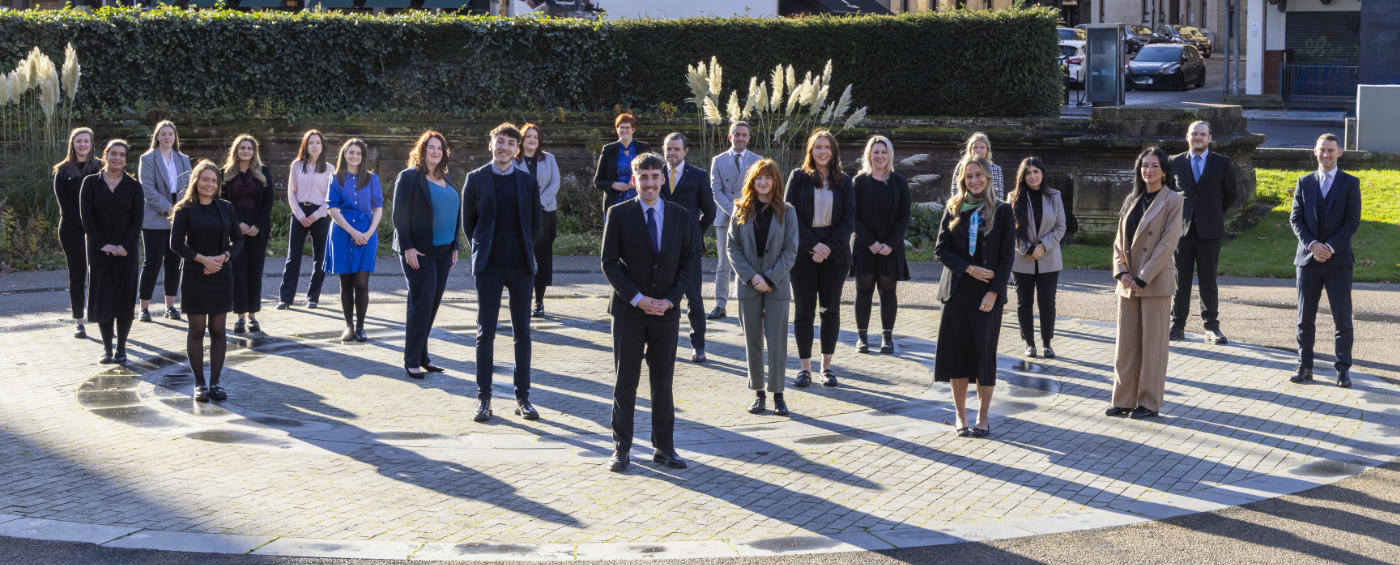
Your legal team
Senior solicitors on every matter
Your matter is handled by experienced solicitors who know Scots business law and will explain your options in plain English.

Billy Smith
Director and Solicitor. Set up the firm in 2010 to deliver legal services better.

Emma King
Director and Solicitor. Joined in 2011 and keeps the firm’s service excellent.

Scott Stevenson
Associate Director. Calm, composed and logical under pressure.

Ciara Young
Associate Director. Trained with the firm from 2019.
Not sure who you need?
Tell us about your matter and we will put you in touch with the right solicitor.