HomeDispute resolutionMediation and ADR
Commercial mediation and ADR
Commercial mediation and alternative dispute resolution in Scotland
Not every business dispute needs to go to court. Commercial mediation and other forms of alternative dispute resolution can settle disputes faster, more cheaply and in private, while keeping you in control of the outcome.

Choose the right route to a settlement
Many contracts already say which route must be tried first. We will tell you what yours requires and which option is likely to work best.
What is commercial mediation in Scotland?
Commercial mediation is a confidential process in which a neutral third party, the mediator, helps businesses in a dispute reach their own agreement. The role of the mediator is to facilitate discussion, not to decide who is right. Instead, they help each side understand the other’s position, test the strengths and weaknesses of their case, and explore solutions that a court could not order, such as a new supply contract or a phased payment plan.
In Scotland, mediation is voluntary, and there is no general rule requiring businesses to mediate before going to court. Even so, the courts and the Scottish Government encourage parties to consider it, and the simple procedure rules ask the sheriff to encourage negotiation or alternative dispute resolution. A settlement agreement signed at the end of a successful mediation is legally binding.
The benefits of mediation for businesses
- Cost effectiveA mediation usually takes a day, compared with months or years of court proceedings, and the costs are shared.
- FasterA mediation can often be arranged within weeks.
- ConfidentialUnlike court, mediation is private, protecting your reputation and commercially sensitive information.
- Control over the outcomeNothing is agreed unless both sides accept it, and the solution can be tailored to your business.
- Preserves relationshipsImportant where you need to keep working with a customer, supplier, landlord or fellow shareholder.
Mediation works best where both parties want to resolve the dispute. It may be less suitable where urgent court orders are needed, or where one side refuses to engage in good faith.
Dispute types suited to commercial mediation
Mediation can help with almost any commercial dispute, including:
- Contract and supply chain disputes
- Shareholder and partnership disputes
- Commercial landlord and tenant disputes
- Construction disputes
- Professional negligence claims
- Disputes after a business sale
- Intellectual property disputes
- Debt and payment disputes
Other forms of alternative dispute resolution
Mediation is not the only alternative to litigation. Depending on your dispute and your contract, other options include:
- NegotiationDirect discussions, often with solicitors, which resolve many disputes at an early stage.
- ArbitrationA private process where an arbitrator makes a binding decision. In Scotland, arbitration is governed by the Arbitration (Scotland) Act 2010 and the Scottish Arbitration Rules. Appeals are limited, which brings finality.
- Expert determinationAn independent expert, such as a surveyor or accountant, decides a technical issue. It is often used for rent reviews, share valuations and completion accounts.
- AdjudicationA fast, statutory process for construction disputes, where the adjudicator must reach a decision within 28 days of referral unless the time is extended.
Many commercial contracts already contain a dispute resolution clause requiring one of these steps before court. We can tell you what your contract requires and which route is likely to give you the best result.
How our solicitors support you through the mediation process
Good preparation is the key to a successful mediation, and mediation is most likely to succeed when both sides come prepared to negotiate. We advise you on whether mediation is suitable, help choose an experienced, accredited mediator, prepare a clear position paper, and attend the mediation with you to advise on offers as they are made. If agreement is reached, we draft a binding settlement agreement on the day. If it is not, the discussions remain confidential and we are ready to pursue your claim through the courts.
At a glance
- Mediation
- Voluntary, confidential and led by a neutral, impartial mediator
- Arbitration
- A private, binding decision under the Arbitration (Scotland) Act 2010
- Construction
- Adjudication gives a decision within 28 days of referral
- Our role
- We prepare you, represent you and turn any agreement into a binding settlement
Tell us about the dispute and we will tell you whether mediation, or another route, is likely to get you the result you need.
Book a free* consultation0141 471 9166*Free initial consultation of up to 30 minutes.What happens at a commercial mediation
- Agreement to mediateThe parties agree to mediate, choose a mediator and sign an agreement covering confidentiality and costs.
- PreparationEach side sends the mediator a short summary of its case and the key documents.
- Mediation dayThe mediator meets the parties together and separately, helping them explore settlement options.
- SettlementIf agreement is reached, the terms are written into a signed, binding settlement agreement.
Questions we are often asked
How much does commercial mediation cost in Scotland?
Costs depend on the mediator and the length of the mediation. The mediator’s fee is usually shared between the parties. In most cases, the total cost is a small fraction of the cost of a defended court action.
How long does a mediation take?
Most commercial mediations take place over a single day, although complex disputes may need longer or a follow-up session.
Is a mediation agreement binding?
Mediation itself is not binding until the parties agree terms. Once a settlement agreement is signed, it is a binding contract that can be enforced.
Do we need solicitors at the mediation?
It is not compulsory, but it is strongly recommended. Your solicitor can advise on offers, explain the legal risks and make sure the settlement agreement properly records the deal.
What if mediation does not work?
You can still go to court. What was said at mediation remains confidential, and many disputes settle shortly after a mediation even where agreement is not reached on the day.
What is the difference between mediation and arbitration?
A mediator helps the parties reach their own agreement. An arbitrator hears the evidence and makes a binding decision, much like a judge but in private.
Get in touch
Speak to a senior business solicitor
Every business matter is different, so we start by listening. Tell us what you are dealing with and we will give you clear, practical advice and an honest view of the likely cost.
Read our Google reviews- Senior lawyers on every matter
- Free* first consultation
- Glasgow based, advising across Scotland
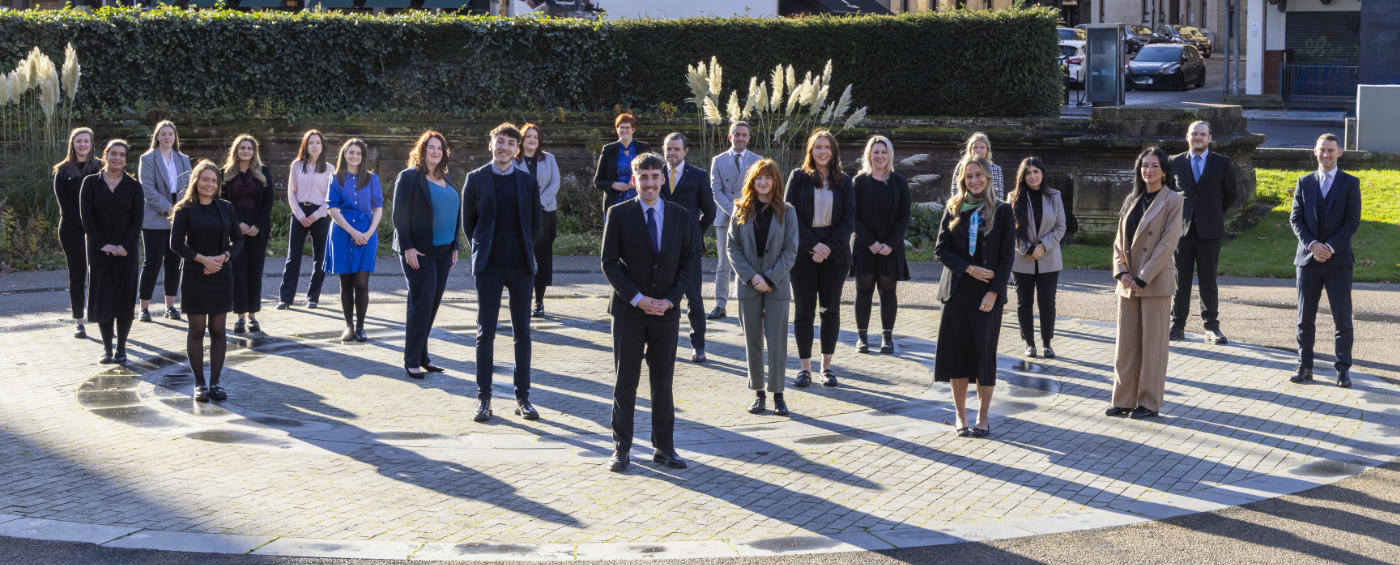
Your legal team
Senior solicitors on every matter
Your matter is handled by experienced solicitors who know Scots business law and will explain your options in plain English.

Billy Smith
Director and Solicitor. Set up the firm in 2010 to deliver legal services better.

Emma King
Director and Solicitor. Joined in 2011 and keeps the firm’s service excellent.

Scott Stevenson
Associate Director. Calm, composed and logical under pressure.

Ciara Young
Associate Director. Trained with the firm from 2019.
Not sure who you need?
Tell us about your matter and we will put you in touch with the right solicitor.