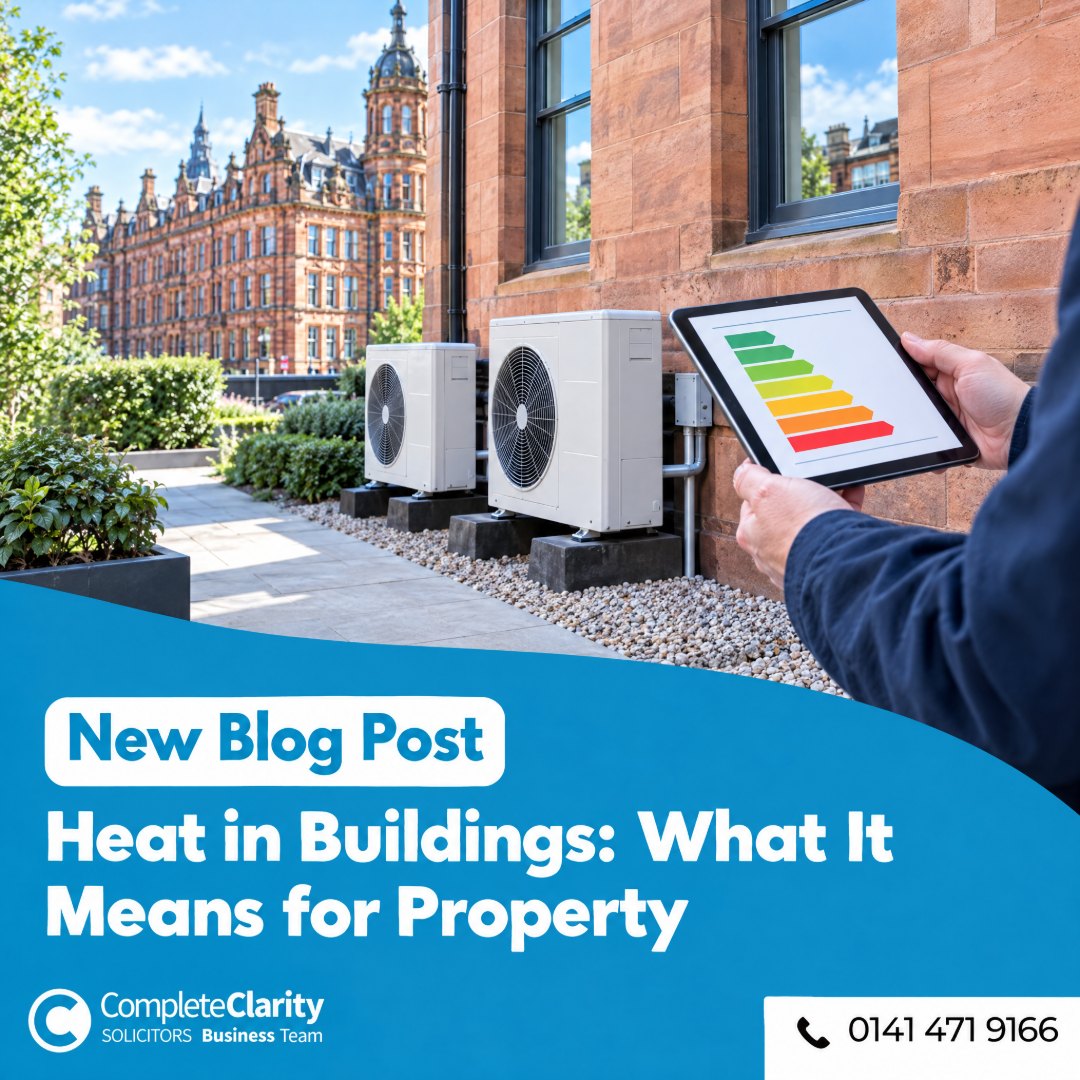
Heating is one of the largest sources of emissions from Scotland’s buildings, and the Scottish Government has committed to decarbonising heat in buildings by 2045. For commercial property, the rules have been through several changes of direction since the first Heat in Buildings Bill proposals in 2023, and some of the most talked about ideas have been dropped or delayed. This guide sets out where things stand in October 2026, what already applies to commercial buildings and what owners, landlords, tenants and buyers should be doing now.
In brief
- No Heat in Buildings Bill has yet been passed. The Programme for Government published in September 2026 commits to introducing one in 2026 to 2027.
- The 2023 proposals to require buyers to replace polluting heating after a purchase were not taken forward in that form.
- A draft Bill published in November 2025 includes a 2045 target and powers to set minimum standards for non-domestic buildings and require connection to heat networks.
- Large commercial buildings are already subject to the Section 63 regime when they are sold or let.
- Planned changes to Energy Performance Certificates have been postponed, so the existing EPC rules still apply.
Where things stand
- November 2023: the Scottish Government consulted on a Heat in Buildings Bill, including a ban on polluting heating systems after 2045 and a requirement for buyers to switch to clean heating within a set period after purchase.
- 2025: the government announced it would not proceed with the Bill in its original form and would take a less prescriptive approach, citing the potential cost to owners.
- November 2025: it confirmed the Bill would not be introduced before the 2026 Scottish Parliament election, and published a draft Buildings (Heating and Energy Performance) and Heat Networks (Scotland) Bill to show its intended direction.
- September 2026: the new government’s Programme for Government committed to introducing a Heat in Buildings Bill in the 2026 to 2027 parliamentary year. The final content will only be known once it is introduced.
What changed from the original proposals
The earlier version of this article, like much of the commentary at the time, focused on two proposals that caused the most concern for property owners: a prohibition on polluting heating systems from 2045, and a purchaser trigger requiring new owners to replace gas or oil heating within two to five years of buying a building. The government has since moved away from that approach. The draft Bill instead frames 2045 as a target, to be met so far as reasonably practicable, and relies on minimum standards and heat network powers rather than a purchaser trigger.
That is a significant change for anyone buying commercial property, but it is not the end of regulation. Powers in the final Bill could still impose obligations on owners, so it remains sensible to factor heating and energy performance into investment and leasing decisions.
What the draft Bill would do
- A 2045 target to replace direct emission heating systems, such as gas and oil boilers, in Scotland’s buildings as far as reasonably practicable.
- Minimum energy performance standards, through a power to set standards for owner-occupied and non-domestic buildings that use direct emission heating. The detail, timing and any exemptions would follow in regulations.
- Heat networks, including a power to require qualifying buildings in a designated heat network zone to connect to the network or otherwise decarbonise their heating. This builds on the Heat Networks (Scotland) Act 2021, under which councils identify zones through their Local Heat and Energy Efficiency Strategies.
Because the Bill has not been introduced, these provisions may change. Owners of larger or older commercial buildings, and buildings in areas likely to become heat network zones, are the most likely to be affected first.
What already applies to commercial buildings
Section 63 action plans
The Assessment of Energy Performance of Non-domestic Buildings (Scotland) Regulations 2016, made under section 63 of the Climate Change (Scotland) Act 2009, already apply when an owner sells or grants a new lease of a non-domestic building larger than 1,000 square metres that was not built to 2002 building standards or later. The owner must obtain an Action Plan setting out improvement measures, and then either carry them out within 42 months or record and report the building’s operational energy use each year. Lease renewals to an existing tenant and short-term lets are excluded.
Energy Performance Certificates
An EPC is still required when a commercial building is sold or let, and larger buildings frequently visited by the public must display one. The Scottish Government had planned to introduce a new EPC regime with new ratings and a five year validity from October 2026, but it has postponed those changes, so the existing EPC rules continue to apply for now. Unlike England and Wales, Scotland does not currently have minimum energy efficiency standards that stop sub-standard commercial property being let.
Implications for commercial leases
The big question for leased buildings is who pays for upgrades. That depends on the wording of the lease, in particular:
- the repairing obligations, and whether replacing a working boiler with a heat pump counts as repair or improvement
- whether the landlord can recover the cost through the service charge
- whether the landlord can enter and carry out works, and whether the tenant needs consent to make its own improvements
- what happens at the end of the lease, including any dilapidations claim and reinstatement obligations
- any green lease clauses on sharing energy data and cooperating on improvements
Landlords should consider these points when granting new leases, and tenants should push back on clauses that make them responsible for wholesale upgrades of the building’s heating. Our guide to limiting repair obligations and our tenant lease service cover this in more detail. Where disagreements arise on existing leases, our landlord and tenant disputes team can help.
Buying and selling commercial property
Even without a purchaser trigger, heating and energy performance increasingly affect value, lending and lettability. When buying commercial property, due diligence should cover:
- the current EPC and its rating, and whether a Section 63 Action Plan exists, with any improvement works or reporting outstanding
- the age and type of the heating system and the likely cost of replacing it
- whether the building is in or near a proposed heat network zone
- how existing leases allocate the cost of improvements between landlord and tenant
Sellers can help their sale by having this information ready. For tax on the purchase itself, see our guide to commercial property LBTT.
What to do now
- Check the EPC rating of each building you own or occupy, and when the certificate expires.
- Identify any buildings over 1,000 square metres that could trigger Section 63 on a sale or new letting.
- Review your leases to see who would pay for heating and efficiency upgrades.
- Ask your council about its Local Heat and Energy Efficiency Strategy and any proposed heat network zones.
- Build heating replacement into long-term maintenance and capital budgets.
- Watch for the introduction of the Heat in Buildings Bill in 2026 to 2027 and the regulations that follow.
Frequently asked questions
Will I have to replace the gas boiler when I buy a commercial building?
Not under current law, and the purchaser trigger proposed in 2023 is not part of the draft Bill. Future minimum standards or heat network requirements could still apply, so it is worth factoring heating into your purchase price and plans.
Is there a ban on gas heating in Scotland?
New buildings must use clean heating systems. For existing buildings there is no ban in force, and the draft Bill sets a 2045 target rather than an outright prohibition.
Do minimum energy efficiency standards apply to commercial lettings in Scotland?
Not at present. The minimum standards that restrict letting of poorly rated commercial property in England and Wales do not apply in Scotland, although the draft Bill includes powers to introduce standards for non-domestic buildings.
What is a Section 63 Action Plan?
A plan required for larger non-domestic buildings when they are sold or let to a new tenant, setting out energy and emissions improvements. The owner must either carry out the works within 42 months or report the building’s operational energy use annually.
Who pays for heating upgrades in a leased building?
It depends on the lease. Repairing, service charge and alterations clauses decide whether the landlord or tenant bears the cost, so take advice before agreeing a new lease or carrying out works.
Need advice on a commercial property or lease?
Our commercial property solicitors advise owners, landlords, tenants and buyers across Scotland on leases, purchases and the energy rules that affect them. Call 0141 471 9166 or book a free consultation.
Related services and guides
This guide reflects the position as at October 2026. The Heat in Buildings Bill has not yet been introduced and its final content may differ from the draft, so please check the latest position before relying on it.